Archive

Archive for the ‘Barcoding’ Category

BCMA Implementation checklist and lessons learned

March 8th, 2010 6 comments

First off let me start by saying that I think BCMA is a worthwhile endeavor. It can have a positive impact on a healthcare system, not only in terms of safety, but with inventory management and billing . The other nice benefit is the ability to see the medication administration in “real-time”. Pharmacists can look at vancomycin and aminoglycoside administration times online now instead of going to the paper chart, for example. And isn’t that the whole idea behind electronic documentation? I think so.

Our facility went live with out first BCMA unit last week. It’s still early, but my initial take is that things went fairly well. We had a few minor issues, but nothing that couldn’t be handled easily and quickly. No matter how well you plan for something there will always be some bumps in the road, and that is important to note.

Below are some things that I picked up along the road to implementation. Some of these things we did well and some we didn’t do at all. This list is my opinion and not the gospel on BCMA implementation by any stretch of the imagination. Please remember that as you read through it.
Read more…

Tags:

Cool Technology for Pharmacy

March 4th, 2010 No comments

In a previous post I mused about using an automated packaging system like InSite from Talyst as a type of automated dispensing cabinet for acute care patients. InSite was designed for long-term care and would simply be too large for the needs of an acute care nursing unit, but the technology is ideal.

However, the ATP-71 (PDF) from Swisslog is a bulk packager that can hold up to 71 canisters in a relatively small footprint: 31.5 inches wide x 29.6 inches deep x 30.6 inches high. For comparison, a Pyxis MedStation 4000 2-drawer main unit is 22.8 inches wide x 26.7 inches deep x 27.7 inches high. I would say that makes the two units comparable in terms of size, and I can tell you from personal experience that a 2-drawer main isn’t very big up close.
Read more…

Cool Technology for Pharmacy

February 11th, 2010 Comments off

The DoseEdge Pharmacy Workflow Manager, formerly IntelliFlowRx Workload Management Software by Baxa, is a system designed to track and manage intravenous (IV) medication dosages prepared by pharmacy personnel in a clean room environment. The system is touted as “The world’s first and only fully integrated workflow manager for the IV room.

The system is designed to flow something like this:

- IV medication orders entered by the pharmacist, or other healthcare professional, are sent to the DoseEdge system where they appear on the DoseEdge touchscreen.
- When the technician, or pharmacist in some cases, accesses the order via the touchscreen instructions for preparation of the product are displayed.
- The product label is generated.
- The barcode on each injectable ingredient used for the preparation of the IV product is scanned to ensure the correct medications have been selected. Items identified as incorrect result in an audible message of “product not allowed for this dose.”
- The barcode on the IV product label generated by the pharmacy is scanned to ensure that ingredients are appropriately matched.
- Each ingredient is drawn into a syringe.
- An image of the syringe with appropriately drawn medication is taken for review by the pharmacist, or technician, whichever the case may be. This is a nice feature as it allows one to see the actual amount of drug drawn into the syringe prior to shooting it into the fluid bag.
- Ingredients are injected into the fluid bag and an image of the final product is taken.
- A final scan of the product barcode is done to complete the fill.

Read more…

Quick hit – Barcode scanner consistency

February 10th, 2010 3 comments

Part of the process of implementing barcode medication administration (BCMA) is evaluating hardware; mostly scanners. There are several makers of barcode scanners including Honeywell, Symbol, Metrologic, Datalogic and Code Corp. Having so many choices always makes the selection process interesting.

One suggestion from several hospitals I spoke with that were already live with BCMA, was to use the same barcode scanner on the nursing floors that were used in the pharmacy. That sounds logical, right? Sure, if the barcode scans correctly in the pharmacy, then nursing should be able to scan the same barcode using the same scanner.

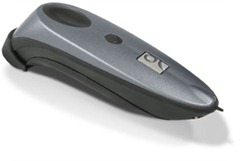
The scanner of choice in our pharmacy department is the the Code Reader 3500 from Code Corp. So of course this is the scanner I recommended in my report to the BCMA hardware sub-committee. For whatever reason, the committee decided to go with a different brand of scanner. Unfortunately the scanners we purchased won’t scan some of the more complex barcodes coming out of pharmacy, making them virtually useless. The scanners purchased by the hospital are on their way back to the wholesaler as I patiently await for round two.

Take away lesson: use the same barcode scanner for the nursing units that the pharmacy department uses to meet their barcoding needs.

Code Corp bar code scanners

January 26th, 2010 Comments off

As I’ve mentioned before our AutoCarousel system from Talyst utilizes barcode scanners from Code Corp, specifically the Code Reader 3.0 (CR3). As you my or not be aware, I’ve been working with Code Corp and Talyst over the past several months in an attempt to replace our aging CR3 with Code Corps newest version of the scanner, the Code Reader 3500.

The Code Reader 3500 uses newer technology over the CR3 and performs much better with our carousel. The reader is easier to use due to its wider target area and “reflection and glare reducing illumination”. It’s also quite a bit faster. The technicians love it.
Read more…

Barcode scanner dilemma

December 15th, 2009 Comments off

barcode_scanAs barcoding in pharmacies grows in popularity I get exposed to more and more barcoding equipment; particularly barcode scanners. Our carousels utilize barcode scanners from Code Corp, our AutoPack system utilizes a barcode scanner from Honeywell – previously Handheld – and our barcode medication administration system will use a yet-to-be-determined scanner. In addition, I’ve accumulated a nice collection of various scanners in my office including wireless, Bluetooth and tethered.
Read more…

Exhibit Hall ASHP #Midyear2009

December 8th, 2009 8 comments

I finally had an opportunity to roam around the exhibit hall at the ASHP Midyear today. Of course I had to sacrifice a session to attend, but it was worth it. If you’ve never been in the exhibit hall at one of these events you owe it to yourself to check it out.
Read more…

Computer options for nurses using BCMA

November 18th, 2009 Comments off

Our facility is in the process of implementing bar code medication administration (BCMA) at the bedside. A large part of the process involves selecting hardware for the nurses to use on the floor. In addition to bar code scanners, the nurses will need access to computers for documenting not only medication administration, but other patient specific information as well.
Read more…

Tags: ,

Google showing a little bar code love this morning

October 7th, 2009 2 comments

My browser homepage is set to Google. Imagine my surprise this morning when I saw the Google homepage was sporting a bar code in place of the typical “Google”. Cool!

googleBC1

Tags: ,

Thoughts on creating a BCMA cross reference file

October 6th, 2009 4 comments

zebra_barcode2Our facility is gearing up to implement bar code medication administration (BCMA) in February 2010. Part of getting ready is making sure that all the medications dispensed from the pharmacy are bar code ready. If the medication isn’t bar coded or won’t scan, then it won’t do the nurse much good at the bedside. We’re in pretty good shape secondary to our carousel install in February of 2008. Everything that gets stored in the carousel is already bar coded. I had hoped that the file stored in our AutoPharm, i.e. carousel, cross reference file could simply be dropped into our Siemens Pharmacy cross reference file, but that would have been too easy. Siemens refused to play nicely with the data.
Read more…