As usual there were a lot of things that happened during the week, and not all of it was pharmacy or technology related. Here’s a quick look at some of the stuff I found interesting.
Continue reading »


As usual there were a lot of things that happened during the week, and not all of it was pharmacy or technology related. Here’s a quick look at some of the stuff I found interesting.
Continue reading »


funny_tech_cartoonI found an interesting article in the October issue of the American Journal of Health-System Pharmacy. The article, titled Informatics in clinical instruction (Am J Health Syst Pharm. 2009 Oct 1;66(19):1694, 1699), gives a description of a software system designed by the authors that “allows students at one site to receive online and teleconference instruction from preceptors at multiple sites through remote, interactive discussion. It also allows “blogging” based on assigned videotapes, simulation modules, live patient cases, discussion questions, and primary literature review. In addition, the system facilitates clinical encounter documentation, including interviewing patients, taking physical assessments (e.g., blood pressure), taking medication histories, assessing for adverse effects (e.g., abnormal involuntary movements), and addressing potential or actual medication-related problems(MRPs).
Continue reading »


As usual there were a lot of things that happened during the week, and not all of it was pharmacy or technology related. Here’s a quick look at some of the stuff I found interesting.
Continue reading »


As usual there were a lot of things that happened during the week, and not all of it was pharmacy or technology related. Here’s a quick look at some of the stuff I found interesting.
Continue reading »


Engadget: “Since barcodes are the sign of the devil (must be true, we read it on the interwebs) it’s no surprise thateveryone wants to replace ‘em. QR codes have been quite popular, allowing people and companies to tag their stuff with colorful decals filled with bits and bytes, and of course RFID tags are still going strong, but a team of researchers at MIT has come up with something better: Bokode. It’s effectively a tiny little retroreflective holograph that is just 3mm wide but, when a camera focused to infinity sweeps across it, the Bokodes become clear and appear much larger, captured in the video below. In this way they can contain “thousands of bits” of data and, interestingly, show positional information too, meaning the camera knows where in 3D space it is in relation to the tag. This, of course, has hundreds of potential applications ranging from grocery shopping to augmented reality, and should lead to new and exciting ways for scholars to interpret/misinterpret Revelations.” – I first saw this information yesterday in a link to a BBC News article that was floating around Twitter. I can see use for such barcode technology in pharmacy. In the BBC article, Dr. Mohan (one of the MIT researchers) makes a comment that while standing in front of thousands of books ”You could take a picture and you’d immediately know where the book you’re looking for is.” Now, replace the word ‘book(s)’ with ‘drug(s)’ and you will understand my interest. More information can be found here.


I spend a lot of time on the internet, probably too much time.  My recent readings resulted in a raised eyebrow when I spotted two articles in particular; one for a new touch-screen anesthesia system from McKesson and the other for a touch-screen coca-cola fountain drink dispenser.
Continue reading »


Healthcare IT Consultant Blog: “VeriChip Corporation Outlines Current Applications and Potential Future Applications for its First-of-a-Kind Implantable RFID Implantable Microchip - VeriChip Corporation, a provider of radio frequency identification (RFID) systems for healthcare and patient-related needs, today provided additional comments regarding its VeriMed™ Health Link patient identification system following the recent passage of a bill by the Pennsylvania House of Representatives banning forced microchip implantation in humans, and also outlined its current and potential future applications for its RFID implantable microchip. The VeriMed Health Link system was cleared by the FDA in 2004 as a Class II medical device and is the first and only implantable microchip cleared by the FDA for patient identification. “
Continue reading »


HIT Consultant Blog: “…But bringing state-of-the-art technology to health care is expensive, often running well into eight figures. Still, there are ways to keep the cost down and also provide excellent care. Forbes caught up with David Whiles, CIO of Midland Memorial Hospital in Midland, Texas, to look at ways to save huge amounts of money without sacrificing quality…So what did you do? – We came across the VistA (Veterans Health Information Systems and Technology Architecture) system, which was developed by the Veterans Administration. That’s used by all the 160-plus VA hospitals in the United States, plus all of their outpatient ambulatory clinics. It’s been in use by the Veterans Administration for more than 20 years. It’s a very mature system. It’s won a number of accolades from the Institute of Medicine.” – Imagine that, open source software being used in a hospital. The software may be a few years old, but thinking outside the box and implementing open source software in a hospital sure sounds cutting edge to me. Where do I apply?


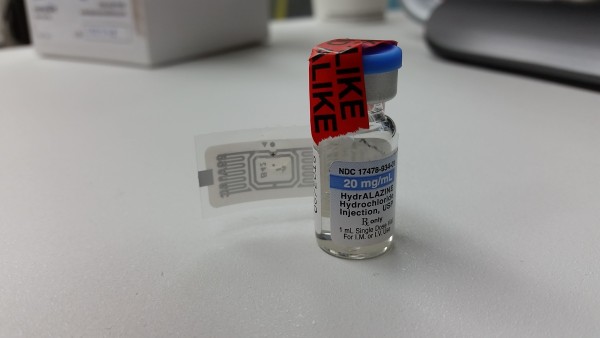
Barcode.com: “RFID, or radio frequency technology, uses a tag applied to a product in order to identify and track it via radio waves. The 2 parts that make up the tag are an integrated circuit and an antenna. While the circuit processes and stores information, the antenna transmits signals to the RFID reader, also called an interrogator, in order to interpret the data in the tag. In contrast, a barcode is an optical representation of data that can be scanned and then interpreted. The data is represented by the width and spacing of parallel lines, and are often used in POS applications, in addition to tracking objects throughout the supply chain.” – The article goes on to give the advantages of both technologies. The more I read about RFID technology, the more interested I become. While the technology hasn’t really caught fire in health care, I think the utility of RFID demands further investigation.

© 2012 Jerry Fahrni Suffusion theme by Sayontan Sinha