Category Archives: Pharmacy Informatics

Center for the study of pharmacy automation and technology [idea]

MadScientistEarlier this week I put up a post about a Prezi created by Dr. Robert Hoyt called Evidence Based Health Informatics: Replacing Hype with Science. It was a great presentation about a lot of the technology that healthcare has adopted over the years without any real evidence to back it up. I wish you could all see it, but it appears that someone has pulled it down. The link I have for the Prezi is dead. Bummer

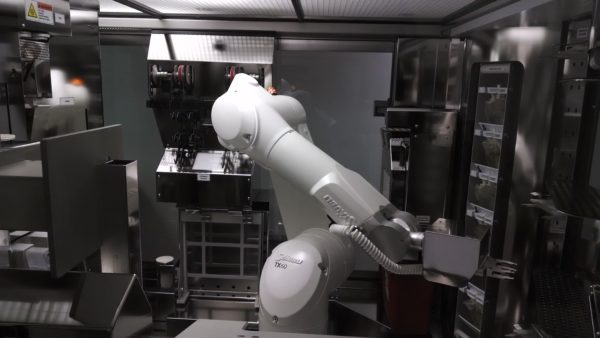
Anyway, the Prezi got me thinking about how we have many technologies in pharmacy that have precious little, or no data to support their use. We use carousels, high-speed packagers, tabletop packagers, robotic medication distribution, robotic IV preparation along with other IV room technologies, smart IV pumps, automated storage cabinets, and so on. The data we do have for these items is typically provided by the manufacturer’s themselves, which makes it biased in the best of situations and completely worthless in the worst cases.

Pharmacy is in desperate need of an academic center for the study of pharmacy automation and technology. The center would study the use of pharmacy technology in different use cases, collect data, and provide the pharmacy community with the information. Look at robotics versus carousels for distribution. Analyze cross contamination in high-speed packagers versus tabletop models. Perform time-motion studies on cart fill vs. automated dispensing cabinets for medication distribution, and compare the safety of one over the other. Analyze pharmacy inventory costs of one technology over the other. And so on, ad infinitum.  Conclusions wouldn’t be necessary as simply presenting the information in an easy to understand format would suffice. Let the end users draw their own conclusions. Every practice setting is slightly different, and what may work for one may not work for another. But understanding how a piece of technology or automation fits into a particular practice model might be a significant benefit to many.

The center would tear the automation and technology apart, both figuratively and literally to unveil all there is to know about each and every piece.

Such a place would have to exist at a well respected academic research center as it is the only way to ensure some semblance of impartiality.

How would it be funded? Ah, there’s the rub. Getting funding for such an endeavor would be difficult at best. A lot of this equipment is expensive. Of course the best place to troll for money would be the pharmacy technology vendors themselves. After all, they have all the equipment that would be needed to perform the research. Unfortunately this is unlikely to happen as most companies will not be willing to drop resources into a project that they have no control over. What if the outcome of such research reflected poorly on their products? That would not only be embarrassing, but could potentially hit them in the pocketbook. No, they couldn’t risk it. How about the federal government? Perhaps, but that might be like getting blood out of a turnip these days.

Getting the equipment and funds would definitely be the hardest part. There’d be no shortage of pharmacists interested in doing that type of work. What pharmacist could resist playing with giant toys all day long?

Time to get out my crayons and start drafting a proposal….

Great Prezi on Evidence Based Health Informatics

Thanks to Tim Cook over at Google+ for the lead on this one.

I’m familiar with Prezi’s, but have never created one. I played around with the technology once, quickly became frustrated, and gave up. Anyway, the Prezi below from Dr. Robert Hoyt - Evidence Based Health Informatics » Replacing Hype with Science - has a lot of great information in it.

Update 3/13/2012: Looks like the presentation was pulled down. Not sure why, but the link is dead. Unfortunate as it was a great presentation.

Interview with Healthcare IS [audio]

I was recently interviewed by Healthcare IS. The audio interview is only about 20 minutes long and covers me answering some general questions about pharmacy informatics, my thoughts on working as an IT pharmacist, etc.


Cerner “smart room” tour [video from 2010]

“…a tour of the All-Digital Smart Room and discusses components including Cerners Room Wizard, Clinical Dashboard, myStation, medical device integration and RxStation.”

The video references Fisher-Titus Medical Center in Norwalk.

  • “Medications tab” ~5:33. Home meds, current meds, and discharge meds presented with option to view drug information.
  • “Medical device integration” ~8:45 to feed info into the EHR.
  • “Cerner RxStation” ~9:35. Not sure why they call it RxStation. Looks like an ADU to me. The first thing that comes to mind when I see “Rx” is “pharmacy”. “RxStation” is a poor choice of name in my opinion.

Pharmacy needs a new method for sharing non-clinical information

Last week I found myself in Florida for work. I had a little extra time on my hands so I stopped by NOVA Southeastern University to visit with a friend and colleague, Kevin Clausen (@kevinclausen). Kevin is not only a pharmacist, but professor and researcher at the Center for Consumer Health Informatics Research at NOVA Southeastern. He’s one of a select few pharmacists that are dedicated to pharmacy informatics in academia.

Kevin and I talked about a lot of topics, but one topic that was of particular interest was getting information published in journals. As an active researcher Kevin has a laundry list of published articles to his credit, giving him keen knowledge of the process for publishing research in peer-reviewed journals. One thing that struck a chord with me was the effort and time required to get an article published. Apparently it can take multiple article revisions and upwards of a year to get an article accepted by a certain journals.

No one that’s been involved in the process would be shocked by this; not even me. I’ve heard this before from other people in my profession. The problem is that the model doesn’t work for informatics, automation and technology (IAT). The speed at which the field is evolving means that information is often obsolete by the time it hits the peer-reviewed journals.

The basic question is whether or not information about pharmacy IAT requires the same rigors as research aimed at the clinical side of pharmacy. Does a study of turnaround time during pharmacy distribution with carousel technology vs. robotics require the same intense scrutiny that a study looking at the use of an ACEI vs. an ARB in PWD and HTN would?  Not likely. While one could argue that the method of distribution may impact patient care it is unlikely that the impact would be worth little more than a friendly debatable among colleagues.
Read more …

UpToDate now available for #Android

The Palmdoc Chronicles:

Android users rejoice. If you are an UpToDate subscriber, you now can download the new UpToDate Android app.

Description
Find clinical answers at the point of care or anywhere you need them! Now you can access current, synthesized clinical information from UpToDate® — including evidence-based recommendations — quickly and easily on your AndroidTM phone or tablet. This app is free to download. However, an individual subscription is required to log in and use it.
Features of UpToDate include:
• Persistent login
• Easy Search with Auto-complete
• Bookmarks and History
• Mobile-optimized Calculators
• Ability to earn CME/CE/CPD credit

This is the first public release of the Android app for UpToDate. Like the first UpToDate iOS mobile app, you need to login and you need an Internet connection. It is more convenient to have a native app rather than access UpToDate from the browser and you get more options than just the browser version. I suppose eventually UpToDate will release an “UpToDate Complete” for Android much like the iOS UpToDate Complete.
Update: It seems that this first release, although a free app, is available only to those who have access to the Google Play store in North America.

Read more …

Lexi-Drugs to include CHEST guideline and Beers Criteria

This is pretty cool. The CHEST guideline was always useful when it came to cardiology and the use of anticoagulants. And for those of you that don’t know, the Beers Criteria is a list of potentially inappropriate medications for use in the elderly. When I did LTC medicine we kept a pretty close eye on the “Beer’s List”.

You can find more information on Lexi-Drugs here.

Quick Hit: Update on keeping up with medical literature with MedInfoNow

Wow, it’s hard to believe that it’s been over four months since I posted this piece on using MedInfoNow. The post caught the attention of someone at MedInfoNow, which resulted in some interesting dialogue in the form of email exchange and a couple of phone calls. I found the company to be genuinely interested in how their customers (clients?) use their product and what they can do to improve the experience.
Read more …

Reviewing an #archetype

I’ve been meaning to write this for a while, but you know how things go.

While at HIMSS12 in Las Vegas last month I was asked to do a little review work. That’s not all that uncommon. People ask me to do things on occasion; review a blog post, review an app, give my opinion on something and so on. But this was completely different as Dr. Heather Leslie (@omowizzrd), Director of Clinical Modeling for Ocean Informatics and Editor for the openEHR Clinical Knowledge Manager asked me to review an archetype. A what? Yeah, that was my response when Heather and I first spoke about the topic nearly two years ago.

According to good ol’ Merriam-Webster an archetype is “the original pattern or model of which all things of the same type are representations or copies: also : a perfect example“. Simple enough, but still too vague for my brain so I went in search of a better explanation which I found at Heather’s blog – Archetypical.
Read more …